
The 2026 State of Validation report found just 13% of organizations are fully digital. Here’s where drawings fit in.
Only 13% of respondents in Kneat’s 2026 State of Validation report said their organization is fully digital across all record types. The report draws on more than 600 validation professionals, the largest sample in the study’s five-year history.
That number sits next to a more encouraging one. Nearly two-thirds of respondents either fully use or are actively implementing a dedicated digital validation tool. Full adoption has nearly doubled year-over-year, rising from 16% in 2025 to 30% in 2026.
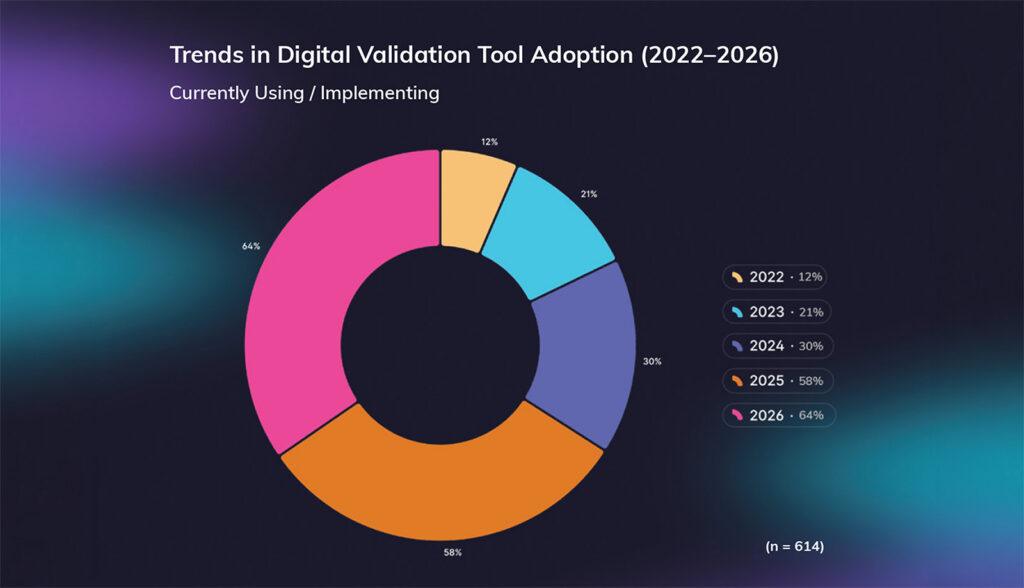
So, the tools are arriving, but full digital maturity is not.
Where paper still persists
The report also asked which record types are still primarily paper-based. Logbooks led at 41%, followed by batch records at 35% and validation protocols at 33%.
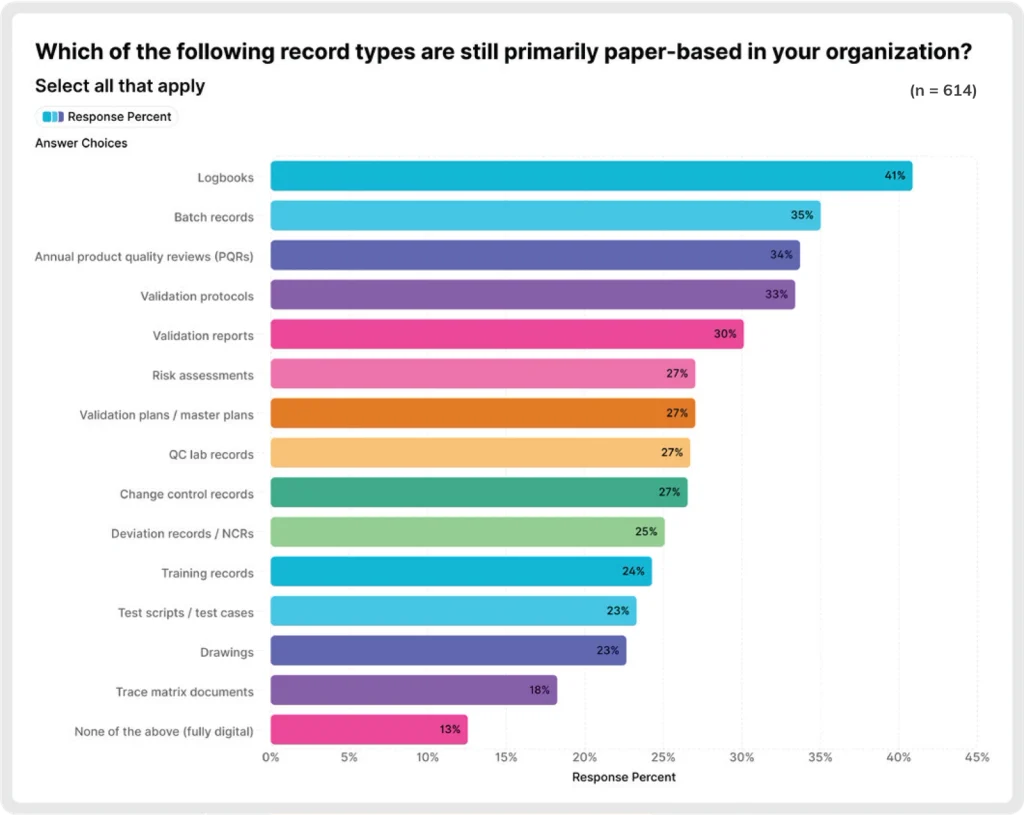
Nearly one in four organizations still work with paper-based drawings. With a role in so many validation activities, drawings are a valuable starting point for extending the benefits of digital validation. Protocols, test scripts, and walkdowns all refer back to them. When drawings remain on paper, teams may need additional manual steps to maintain revision control and traceability to the validation activities they support.
Where drawings become disconnected
Piping and instrumentation diagrams (P&IDs), layouts, and schematics support design review, commissioning, qualification, walkdowns, and change management. They often originate in CAD tools and are managed in engineering systems, shared drives, or printed packages.
When drawings and their associated validation records are managed separately, teams may need to confirm which revision was used, reconcile field markups, and locate the comments or approvals supporting a decision. Even where drawings are digital, maintaining that connection can require additional manual effort.
What closing the gap looks like
Kneat Gx Drawing Management puts drawings in the same platform as validation records. Teams upload drawings with version traceability, and supported CAD format files convert automatically to browser-viewable PDFs. Reviewers mark up and approve in the application, with e-signatures and audit trails that support 21 CFR Part 11 and EU Annex 11. Drawings link to the equipment entities they represent, so reviewers move between a drawing and its related records without leaving Kneat.
It works alongside your CAD, EDMS, and PLM systems. It does not replace them. It controls how drawings are used in validation.
The approach scales. Novartis migrated 40,000+ drawings into Kneat using the Kneat Entity Importer (Kneat’s bulk-migration tool). Its drawings now sit in the same system as its commissioning and qualification (C&Q) data.
See how Novartis brought Drawings into its C&Q validation program with Kneat Gx and found significant savings.
See Kneat Gx Drawing Management in action

Watch our webinar, “Managing Drawings in Kneat Gx: One Platform for Drawings and Validation — Your Way.” We will show how teams bring drawings into the digital validation record.
You’ll learn how to:
- Manage native Drawing Management in Kneat Gx
- Connect drawings to validation workflows
- Review, redline, and approve drawings
- Retain markups, comments, and annotations
- Support validation, QA, and engineering