


Validation Use Cases
Award-Winning validation lifecycle management
Kneat Gx manages any validation discipline, end-to-end, your way so nothing falls through the cracks
Book a demoTrusted by






validation lifecycle management
What is validation lifecycle management?
GxP validation ensures that products consistently meet quality standards throughout their lifecycle — particularly critical in pharmaceutical and medical device manufacturing and is necessary to maintain compliance with regulatory bodies such as the FDA, EMA and WHO where product variations could directly impact patient health outcomes.
Validation lifecycle management gives organizations the framework to sustain that assurance over time — from design right through to commercial production.
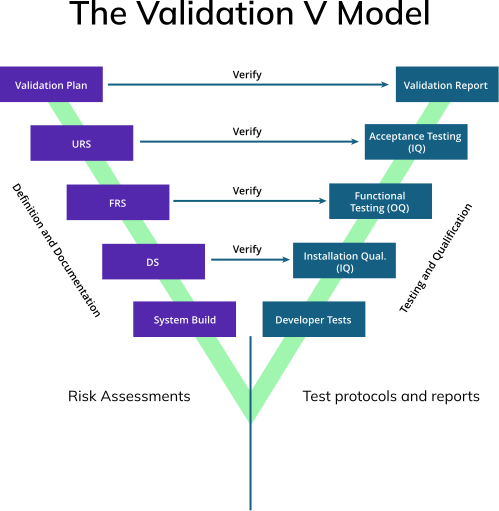
Validation Lifecycle Management Systems (VLMS) are purpose-built software that manages the full validation lifecycle in a single, connected environment — from requirements and risk assessments through test execution, approvals, change control, periodic review, retirement and decommissioning.
Biotechnology
Biologics are complex, living processes — validation lifecycle management ensures every critical system stays in a proven, controlled state from first batch to commercial scale.
Pharmaceutical
From API manufacturing to final release, validation lifecycle management is how pharmaceutical companies prove to regulators — and themselves — that quality is built in.
Medical devices
If a device failure reaches a patient, documentation gaps become liability — validation lifecycle management keeps every design, system, software update, and process change audit-ready throughout the product's life.
Consumer health/CDMO
Multi-product facilities running on tight timelines can't afford validation debt — lifecycle management keeps compliance continuous across every product, client, and site.
KNEAT GX
What a platform should do
Every validation discipline, one platform
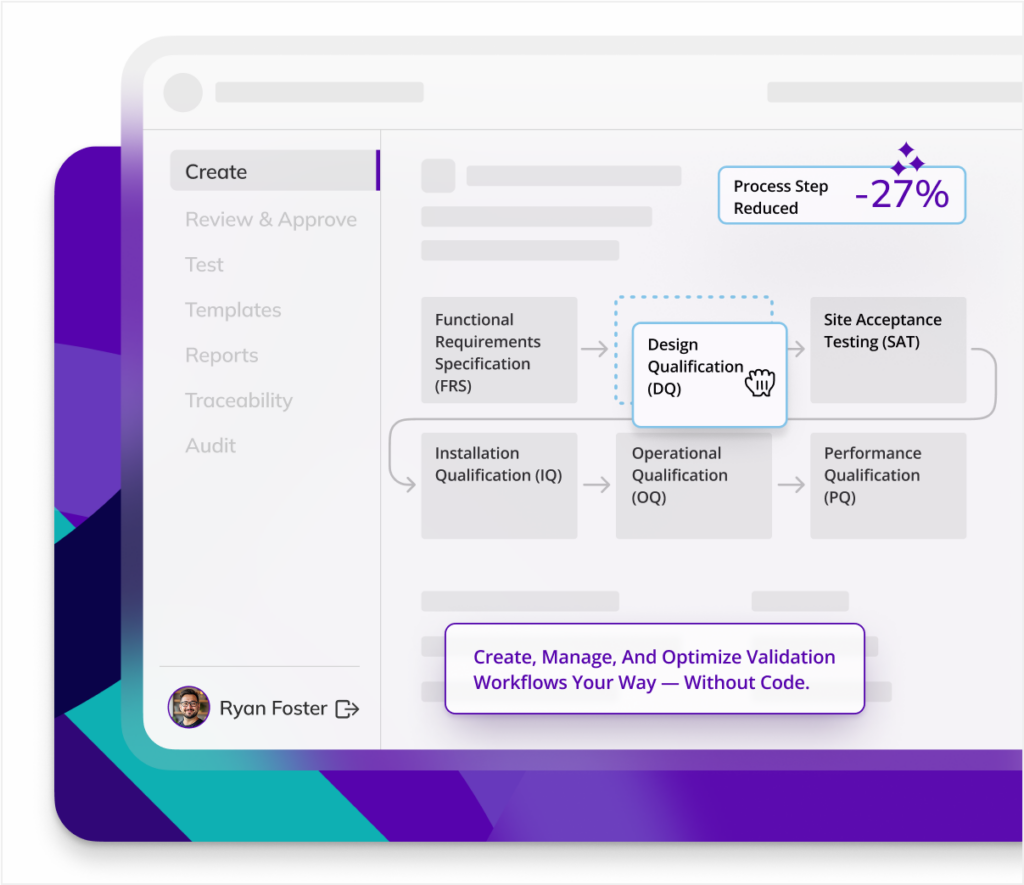
Kneat Gx covers Process, Cleaning, CSV/CSA, Commissioning and Qualification, Equipment, Analytical Instrument, Utility and Facility, Cold Chain, Method, Electronic Logbook, Document, and Drawing Management in a single configurable system — no point-tool sprawl, no siloed traceability, no validation discipline operating outside the governed environment.
Live, end-to-end traceability
Every requirement, risk, test, and document stays connected across the validation lifecycle — and when a URS is updated, linked IQ and OQ entities update automatically, giving teams a live view of their validation state rather than a snapshot assembled the night before an audit.
Audit readiness by default
Compliance with 21 CFR Part 11, EU GMP Annex 11, and ALCOA++ data integrity principles is built into how Kneat Gx works — every action captured in a tamper-proof audit trail with automated timestamps and electronic signatures, so your complete GxP record is on demand when an inspector walks in.
Configurable for every site, governed centrally
No-code configuration gives local teams the flexibility to work the way they need to, while global quality and validation leadership maintains a single governed standard — one Kneat customer has deployed this way across 27 sites globally.
Built for data-centric and document-centric workflows
Kneat Gx supports both methodologies in the same workspace, so organizations can adopt data-centric validation at their own pace without abandoning existing protocol structures or forcing a rip-and-replace.
Designed by validation professionals, for validation professionals
Kneat was built by people who ran validation programs before they built software for them — the result is a system validation engineers adopt quickly and trust completely.
Why a platform?
Why Validation Lifecycle Management needs a platform
Regulators and industry groups strongly recommend digital validation tools (DVTs) or validation lifecycle management systems (VLMS) in helping to meet the demands of Pharma 4.0 and AI-driven transformation. These platforms connect every lifecycle stage in an audit-ready, fully compliant system — eliminating the risks of paper-based practices.
A good platform can use a data-centric approach to validation, instead of being driven by static document-focused practices. Critically, it must also cover every stage of the lifecycle, from initial planning and risk assessments, to change control and even final reporting.
BENEFITS
Escaping the paper piles
Validation is one of the most documentation-intensive functions in life sciences — and most organizations are managing it across a patchwork of tools, spreadsheets, and disconnected systems. The result is traceability gaps, audit exposure, and engineering capacity consumed by rework instead of real validation work
- Siloed data, manual extraction: When teams run validation processes on different tools manual effort is needed to generate traceability matrices, create inspection-ready audit trails, and provide a global view of your complete validation status.
- Validation workload outpaces capacity: every new system, equipment, process, patch, or integration adds validation work the team can't keep up with, adding endless hours for review cycles and rework.
- No global standard: each site operates slightly differently, blocking standardization and tech transfer and significantly increasing cycle times across the organization.
Revolutionize your validation
Digitalize validation your way, with the validation platform trusted by the world’s leading life sciences companies.
Book a demoCustomer Success
Case studies
Biogen’s lab of the future
Biogen digitalized analytical instrument validation to deliver their “Lab of the Future” vision, achieving greater efficiency, data integrity, and compliance.
use cases
 Analytical Instrument Validation

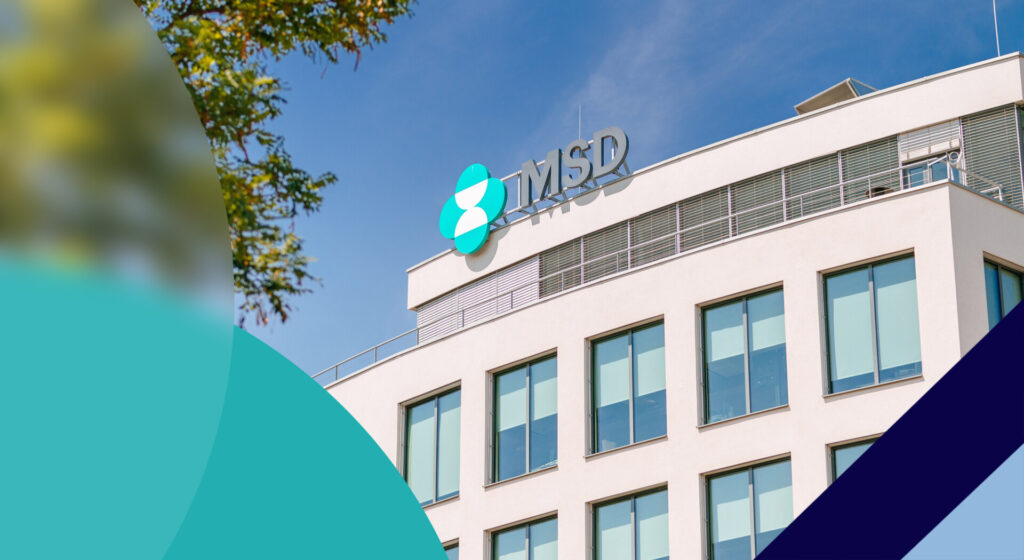
Merck Sharp & Dohme (MSD) reduced validation time by 50%
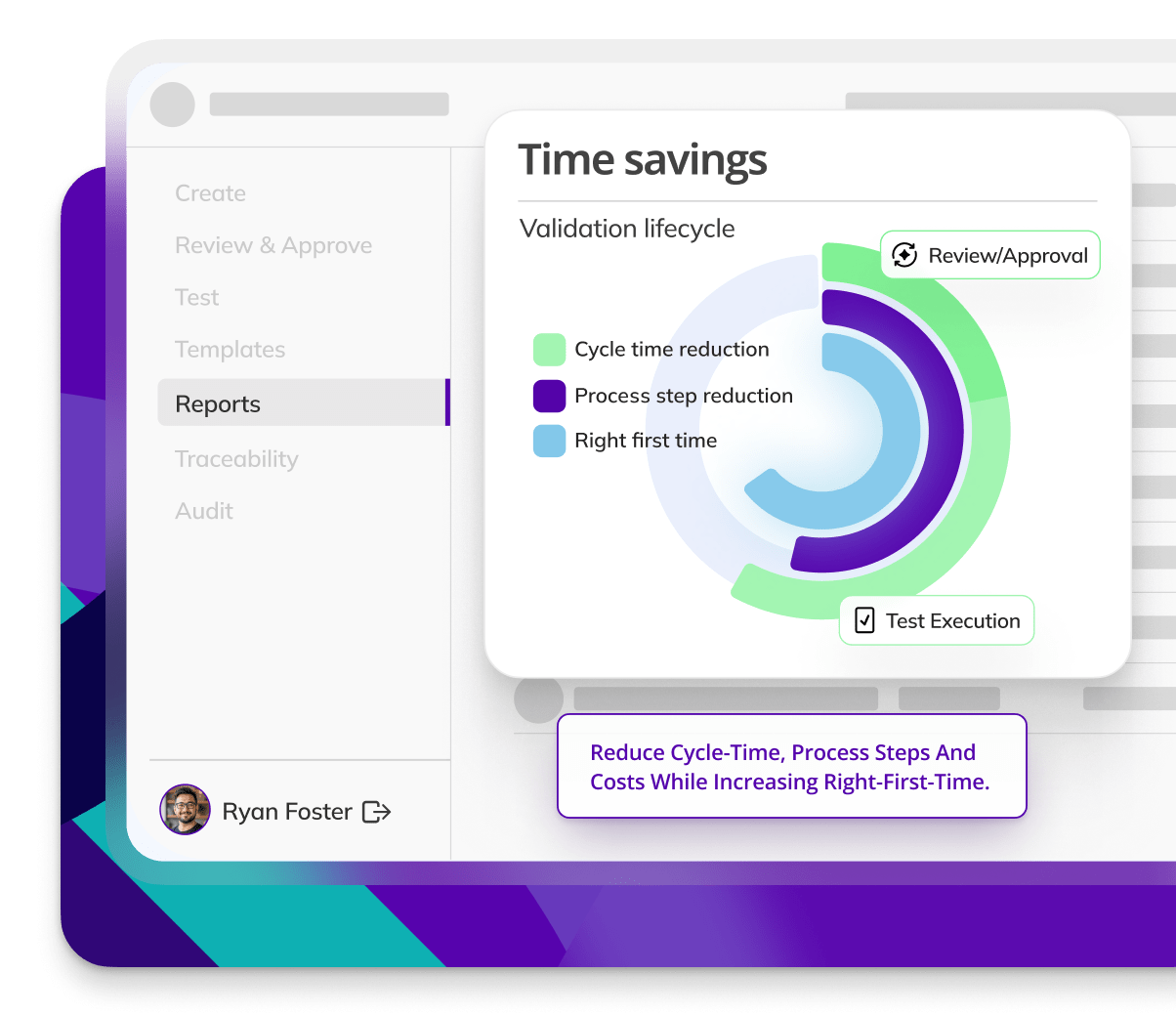
MSD digitized seven validation processes globally, reducing cycle times by 50%, process steps by 46%, and replacing three QMS systems.
use cases
- Analytical Instrument Validation
 Audit
Audit Cleaning Validation
 Commissioning & Qualification
 Computer System Validation
 Equipment Validation
 Facilities & Utilities Validation
 Process Validation
Fujirebio Diagnostics, Inc uses Kneat to provide CSV at scale
Fujirebio Diagnostics cut CAPA change control time in half and is saving 40% on test script execution, translating to significant savings.
use cases
- Audit
- Computer System Validation

Enabling ElevateBio’s industry-disrupting business model
ElevateBio reduced cycle times by 50%, accelerated manufacturing changeovers, and delivered top-tier quality assurance with Kneat.
use cases
- Commissioning & Qualification
- Computer System Validation
- Equipment Validation

What is Validation Lifecycle Management?
Validation Lifecycle Management is the end-to-end process of planning, executing, maintaining, and retiring systems, processes, and equipment in life sciences. It covers every phase from initial risk assessment and qualification (DQ, IQ, OQ, PQ) through ongoing change control, periodic review, and system retirement and decommissioning — ensuring that regulated systems remain in a proven, compliant state throughout their operational life, not just at go-live.
How is a VLM platform different from a quality management system?
A Quality Management System (QMS) manages broad quality processes across an organization — CAPAs, deviations, complaints, change records, training, and document control. A Validation Lifecycle Management platform is purpose-built for the validation workflow specifically: structured protocol authoring, requirements management, risk assessment, test execution, approval routing, traceability from requirement to test evidence, and the generation of audit-ready validation documentation.
The distinction matters in practice. A QMS records that a change occurred. A VLM platform manages the full validation consequence of that change — impact assessment, revalidation scope, updated protocols, and the closed compliance record that proves the system is still in a validated state.
Some organizations use both, with the VLM platform handling validation execution and the QMS handling the broader quality event that triggered it.
How is a VLM platform different from an application lifecycle management tool?
Application Lifecycle Management (ALM) tools — such as Jira, Azure DevOps, or HP ALM — are designed for software development teams. They manage requirements, defect tracking, test cases, and release cycles in a development context.
A VLM platform is designed for GxP compliance, not software delivery. The distinction shows up in several ways: VLM platforms enforce 21 CFR Part 11 and EU Annex 11 controls (electronic signatures, audit trails, access controls), produce validation documentation that satisfies regulatory inspectors rather than development stakeholders, and are built around the qualification and validation vocabulary life sciences teams actually work in — protocols, test scripts, RTMs, summary reports, and formal approval workflows.
ALM tools can be validated for use in a GxP environment, but that is a separate and significant effort. A VLM platform is built compliant by design.
What validation disciplines does Kneat Gx support?
Kneat Gx is built for every validation discipline, from computer system validation (CSV) to cleaning, to analytical instrument.
Is Kneat Gx 21 CFR Part 11 and EU Annex 11 compliant?
Kneat supports fully data integrity with robust controls including audit trails, electronic signatures, access controls, and time stamps. Kneat enhances data integrity across the full validation lifecycle.
How long does it take to implement Kneat Gx?
Implementation timelines vary based on organization size, number of sites, integration complexity, and the scope of validation activities being migrated. Kneat provides customer handover packs and dedicated support to streamline implementation, achieving a best-in-class rating for support.
Can Kneat Gx run paperless validation alongside legacy paper-based processes?
Kneat’s value scales with growth, delivering more ROI with more usage. However, companies can implement Kneat’s digital solution to the depth they’re comfortable with, including running Kneat alongside paper-based legacy programs. Hybrid solutions, however, carry potential risks of failure as documents and processes lose the compliance protections of digital systems.
How does Kneat support global, multi-site standardization?
Kneat’s cloud-based, template-driven approach means the validation lifecycle can be managed from anywhere, which enables organizations to deploy standardized validation templates, SOPs, and approval workflows across all sites simultaneously — replacing site-specific paper systems with a single source of truth.